 AI
AI
What Is AI Implementation for Businesses in Uzbekistan?
AI implementation is not adding a chatbot. It is embedding intelligent agents into real business workflows - lead qualif...

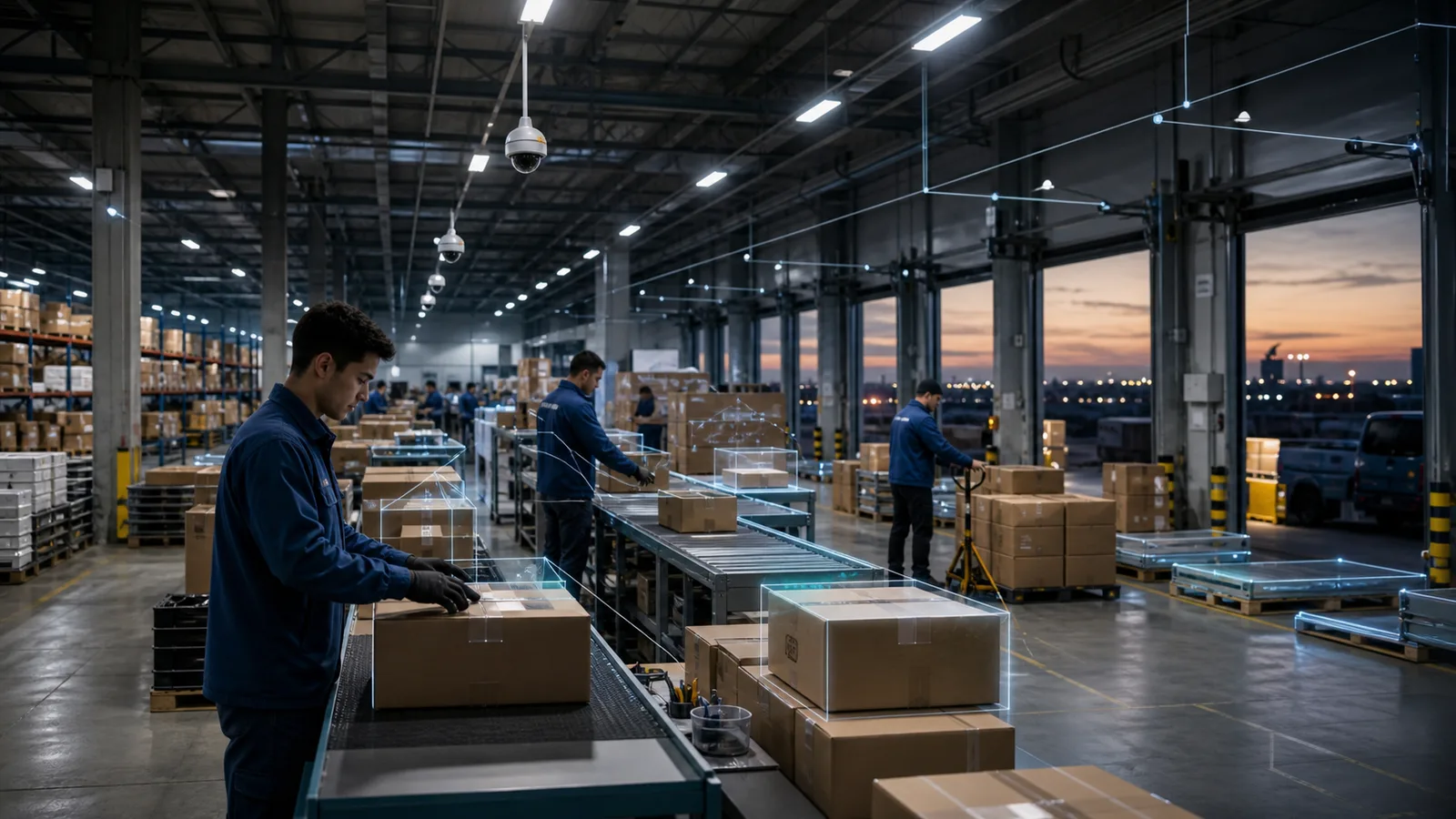
At 18:40, in an e-commerce warehouse in Sergeli, everyone wants the same thing: close the shipment and let the courier go. The operator is already applying labels on autopilot, the boxes all look alike, the queue is pressing. One wrong sticker — and goods worth 780 000 soums leave for the wrong customer. Then come the return, the phone calls, the mis-sort, and the margin disappearing.
I would not start this kind of automation with robots. For most warehouses in Uzbekistan, the first sensible step is Physical AI without moving hardware: cameras above the gates and packing stations, weight and temperature sensors, plus a workflow engine that assigns a task by itself, blocks a questionable shipment, and messages the shift team in Telegram or the ERP. The camera sees the pallet and barcode, the sensor confirms the weight, the system checks it against the order and says: “stop, wrong SKU” — before the vehicle leaves the gate. It is faster to implement and hits the real pain of warehouses in Tashkent, Samarkand, and Fergana much more directly: manual checks, tired people, and blind spots in inventory control.
I have seen warehouses where the business bought expensive equipment, while part of the operation still lived in Excel. On a tour, it looks convincing. During a shift, not so much.
Physical AI in a warehouse is not necessarily a robot driving between racks. It is a system that understands a physical operation: a pallet has arrived, a door has closed, a box has passed over the scale, the temperature has started creeping up. And most importantly, it does not just show video on a monitor. It triggers action: create an incident, ask for a rescan, close a task, alert the shift supervisor.
You do not need to cover the entire warehouse with cameras right away. The quick wins are usually found in four places.
🚚
The camera captures the pallet number and checks the incoming goods against the delivery note before the load gets scattered across the warehouse.
📦
The system spots an extra or wrong box in the order assembly area — exactly where mistakes most often surface at the end of a shift.
✅
Before closing the route, AI compares the label, dimensions, and weight with the order and does not let an obvious mis-sort through.
🌡️
The temperature sensor raises an alarm not after the goods are spoiled, but the moment the conditions start drifting out of tolerance.
My rule
If a warehouse runs on manual scanning and visual checks, robots are almost always premature. First give the system vision, scales, and a clear response scenario.
Take a cosmetics distributor with 6 000 SKUs and daily shipments to marketplaces, stores, and the regions. At packing, we install two IP cameras, proper lighting, a weighing platform, and an operator screen. Every order passes through a checkpoint: the camera reads the label, the model recognizes the packaging type, and the weight is checked against the expected range.
If everything matches, the order moves on without an extra click. If the weight is 400 grams too low or the camera sees a different label, the system pauses the order and creates a task for the shift lead. Not a report tomorrow morning. A signal right now.
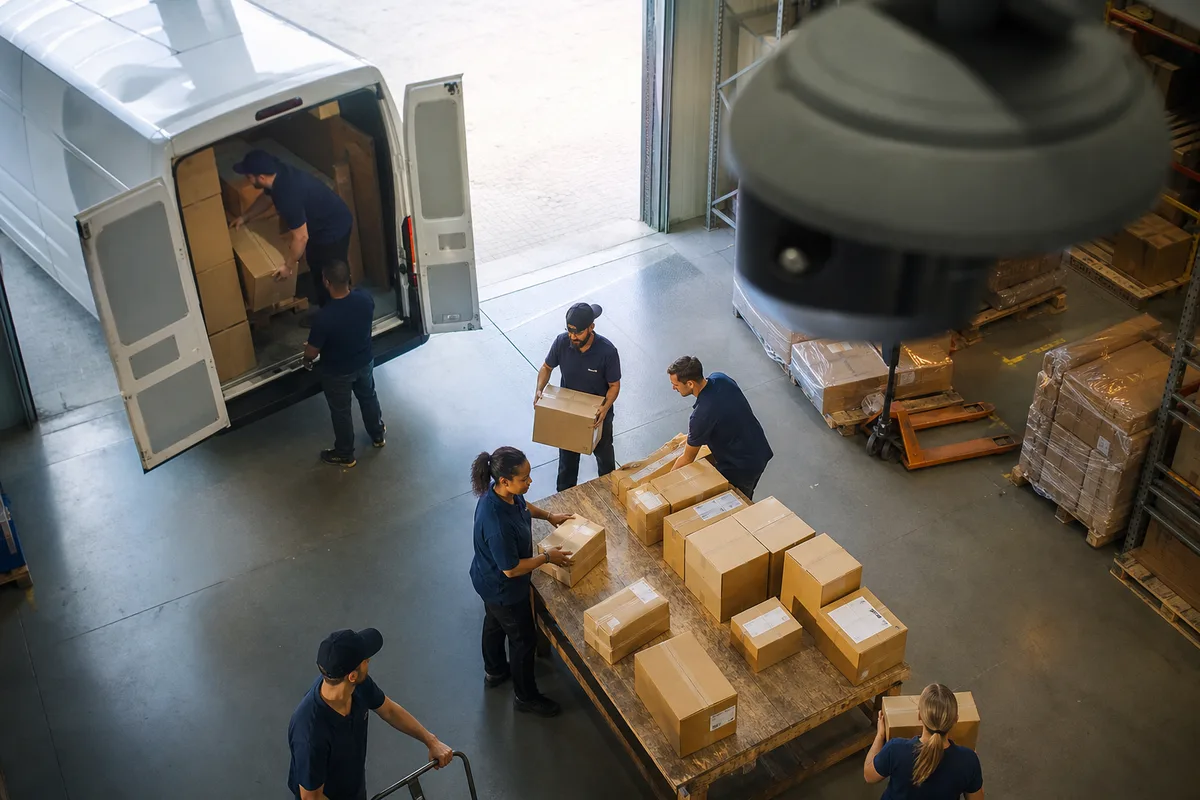
Vision covers routine checks that used to depend on shift memory.
up to 70%fewer miss-ships
2–5 yearstypical payback period
0robots at the start
According to KEYENCE, machine vision systems in logistics can reduce shipping errors by up to 70%, and payback often fits within 2–5 years. In Uzbekistan, I would calculate it even more down to earth: how much does one wrong order cost, one return from Nukus, one hour of recounting stock on a Saturday?
A camera for a couple of million soums will not replace a WMS. But it can remove the most expensive manual check — the one people perform hundreds of times a day and still occasionally miss. That is where the money is.
A proper Physical AI pilot does not start with an 80-slide presentation. It starts with one bottleneck where the error is already visible in money.
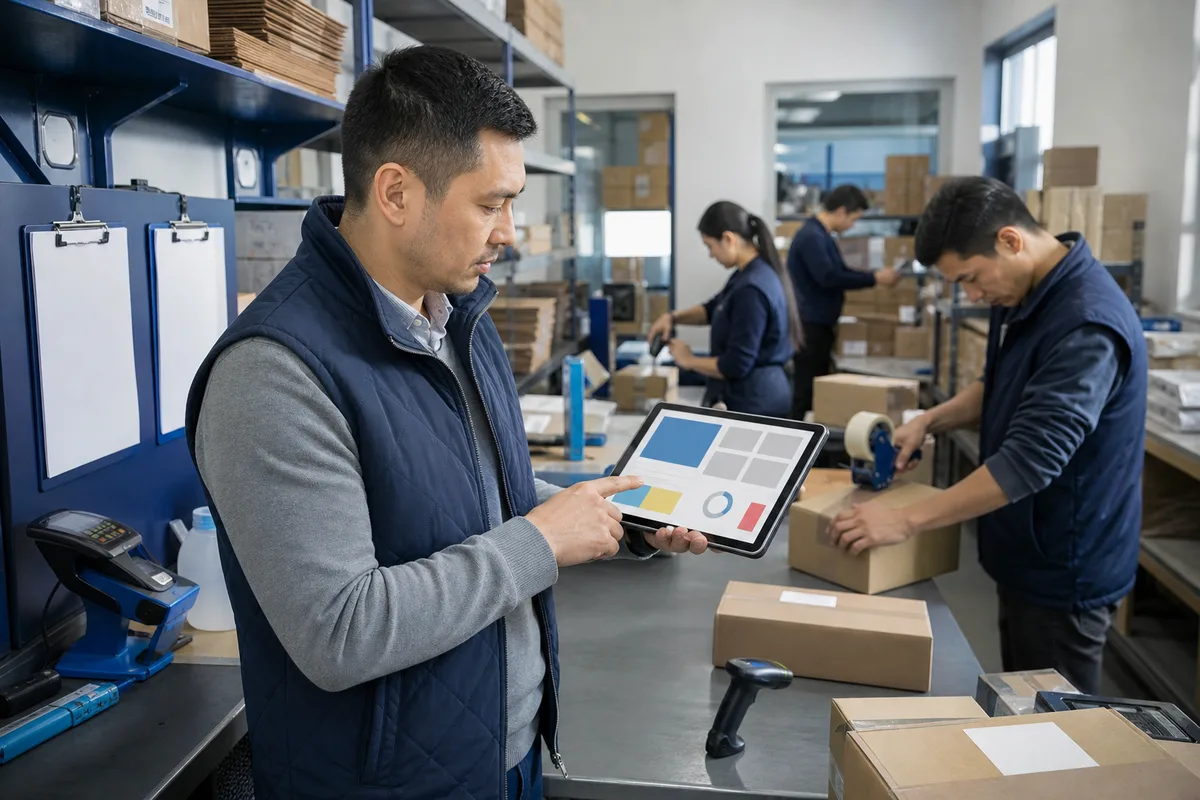
A workflow engine turns a sensor signal into a task for the right person.
Computer vision does not forgive dirty lenses, poor lighting, or chaos in labeling. If one pallet has three types of labels, some boxes are wrapped in film, and the checkpoint faces bright loading doors, the model will start making mistakes. The team will stop trusting it very quickly.
The second risk is automating a mess. If employees do not understand who responds to an alert and within how many minutes, AI turns into yet another noisy screen. That is why at Celion we do not design “cameras for the sake of cameras,” but a connected setup: event, rule, owner, deadline, action log.
A warehouse becomes smarter not when a robot appears in it, but when mistakes stop slipping through unnoticed.
Celion engineering practice
Physical AI should not live on a separate island. The camera sees a pallet, the WMS knows the order, 1C stores the documents, and Telegram or a corporate chat delivers the alert to the shift lead. The chain is simple, but the discipline of operations changes immediately: a questionable order can no longer be quietly pushed further along.
There is a nuance for local businesses: warehouse internet is not always stable, and some data is better processed close to the camera, on an edge device. Then the system continues checking shipments even with a weak connection, while sending only events and the necessary fragments to the cloud. That is more practical than pushing the entire video stream outside.
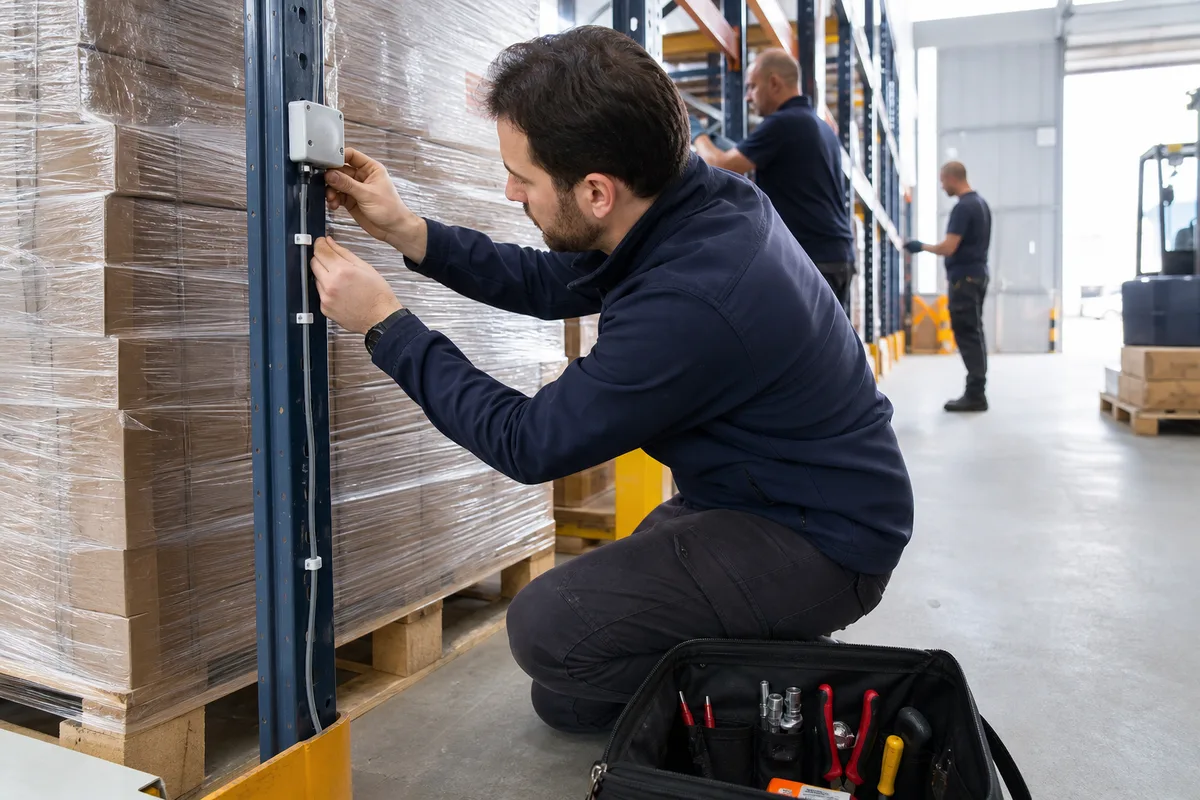
A pilot can start with sensors and cameras without major warehouse renovation.
In short: warehouse automation should be built from the bottom up, starting with visible errors and manual checks.
How much does a Physical AI pilot for a warehouse in Uzbekistan cost?
The price depends on the zone, the number of cameras, sensors, and integrations. A small pilot in one area is better viewed not as “buying AI,” but as an engineering project: assessment, equipment, model, workflow, and integration. It is worth starting where the savings can be calculated quickly through errors, returns, and hours of manual checking.
Do we need to have a WMS already implemented?
Preferably, but not necessarily. If there is a WMS, the system takes orders, SKUs, and statuses from it. If the warehouse still works through 1C, Excel, or its own admin panel, you can start with a limited scenario: checking the label, weight, and shipment photo. Later, you can connect the full warehouse management loop.
Will AI recognize Uzbek, Russian, and mixed labels?
Yes, if the right data is collected. Local warehouses often have mixed labeling, different printers, Cyrillic, Latin script, and supplier stickers. The model needs to be trained on real photos from your warehouse, not ideal pictures from a demo. Then accuracy will be much closer to the working environment.
What if employees are afraid of being monitored by cameras?
You cannot sell the project to the team as “we are now watching everyone.” The working message is different: the system catches mis-sorts, protects the shift from disputed situations, and removes part of the monotonous checking. Plus, there need to be clear rules for access to video and logs, so control does not turn into conflict.
Can this be implemented in an old warehouse without reconstruction?
In most cases, yes. Cameras, lighting, weight sensors, and edge devices can be installed point by point: at the gates, at packing, in the refrigerated zone. A full reconstruction is rarely needed. It is much more important to choose a stable checkpoint where goods pass through a clear scenario and the data can be checked against the order.
Celion designs AI and software solutions for businesses in Uzbekistan: from computer vision in the warehouse to integration with 1C, WMS, and internal systems. Write to us — we will break down your process and show where cameras and sensors can remove manual work without buying robots.
Callback
Leave your details and we will contact you shortly.
Order Service
Leave your phone number and we will contact you shortly.